
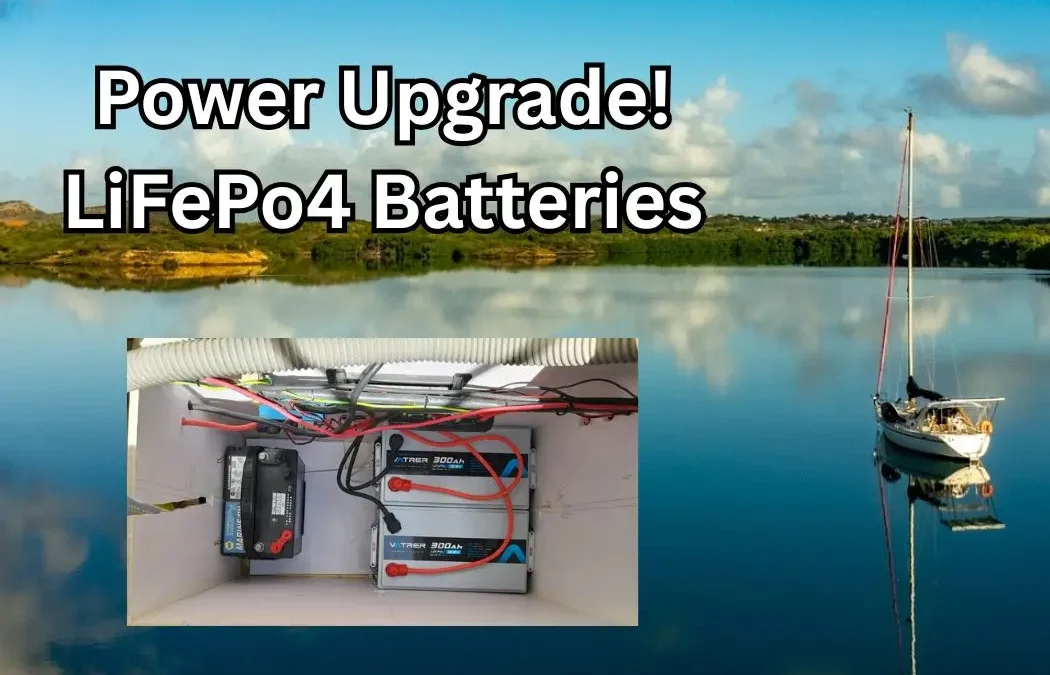
February 8th, 2026
Lithium Batteries on a Sailboat – Real Boat Life Between Repairs and Upgrades
Upgrading a boat rarely happens in neat, isolated steps. More often, one project leads straight into the next — usually because something else decides to fail at the same time.
That’s exactly how this week unfolded aboard Anima.
While preparing for a long-planned lithium battery upgrade, I also found myself dealing with a much less glamorous but critical task: repairing the salt water strainer for the engine cooling system. Two very different jobs, but both essential for reliability offshore.
This is what real boat life looks like.
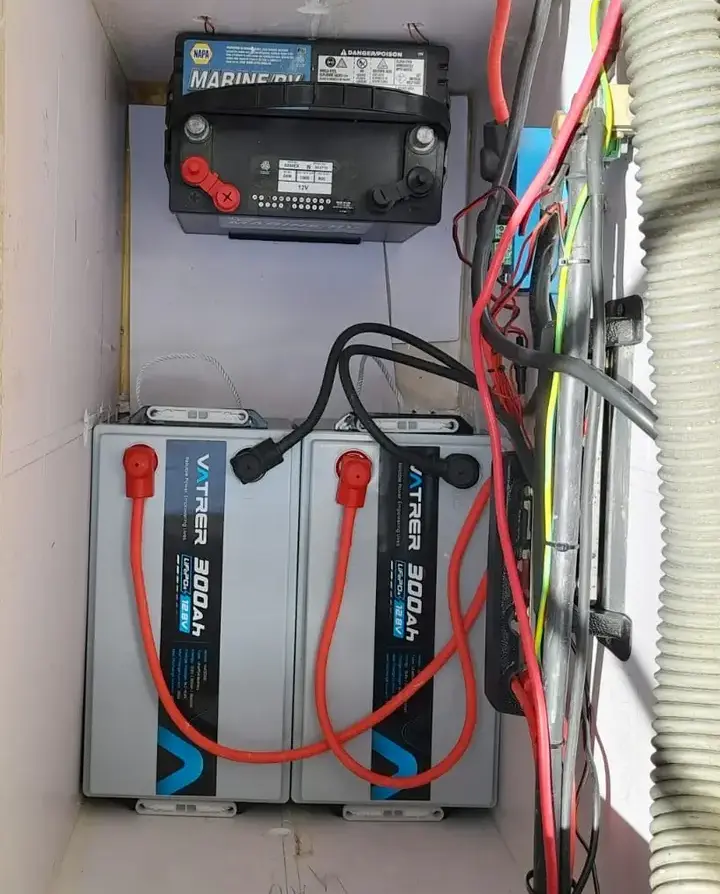
Why I Decided to Upgrade to Lithium Batteries
The idea of switching to lithium batteries had been on my list for a long time. Power management on a cruising boat is always a compromise — limited space, limited weight, and systems that depend on electricity more than most people realize.
Lithium batteries promise:
- More usable capacity
- Faster charging
- Less weight compared to lead-acid banks
But they also come with questions and doubts:
- Is lithium really worth it on an older boat?
- How complex is the installation?
- What can go wrong?
Rather than presenting a perfect “how-to”, this upgrade is part of an ongoing learning process — adapting systems step by step while actually living aboard.
When Maintenance Can’t Be Ignored: The Salt Water Strainer
At the same time, the engine reminded me why preventative maintenance matters.
The salt water strainer, a small but crucial component in the cooling system, needed attention. Ignoring issues here can quickly turn into overheating problems — something no sailor wants to deal with at sea.
This repair wasn’t planned, but that’s the reality of maintaining a boat:
projects rarely happen in isolation.
Fixing problems as they appear is just as important as upgrading systems for the future.
In between all the mess and projects, there are moments that remind me, why I am doing this.


Project Boat Reality: Progress Isn’t Linear
One of the biggest misconceptions about refits and upgrades is that they follow a clean roadmap. In reality, progress is messy.
- You plan an upgrade → you discover a problem
- You fix a problem → you improve the system
- You improve the system → something else needs attention
This constant loop is part of what turns a project boat into a capable cruising boat over time.
Lessons Learned So Far
Even at this stage, a few things are already clear:
- Lithium upgrades require planning, not rushing
- Small components (like strainers) can have big consequences
- Reliability comes from doing the unexciting work consistently
This week wasn’t about sailing far or chasing perfect conditions — it was about laying groundwork for future miles.
Watch the Full Episode
If you want to see how these projects came together in real conditions — including the challenges along the way — you can watch the full video episode here:
👉 Subscribe to my YouTube channel so you don’t miss the next installment of “About the challenges of the week?”
If you enjoy following my story of my Life on my Boat, Sailing Adventures and DIY projects, please like, comment, and subscribe — it helps the channel grow and keeps the journey going.
Or join me on Patreon – I appreciate and I am grateful for any type of support.
Cheers
Paul – SY ANIMA