Sailing in Curaçao
A Practical Guide for Cruising Sailors
Arrival & Clearance in Curaçao (by Boat)
Most sailors arrive in Curaçao from the east, often after passages from Bonaire, or the Eastern Caribbean. Depending on your plans, there are several options for where and how to clear in. For most cruising boats, Spanish Water Lagoon is the most practical and least stressful entry point.
Clearing In via Spanish Water Lagoon
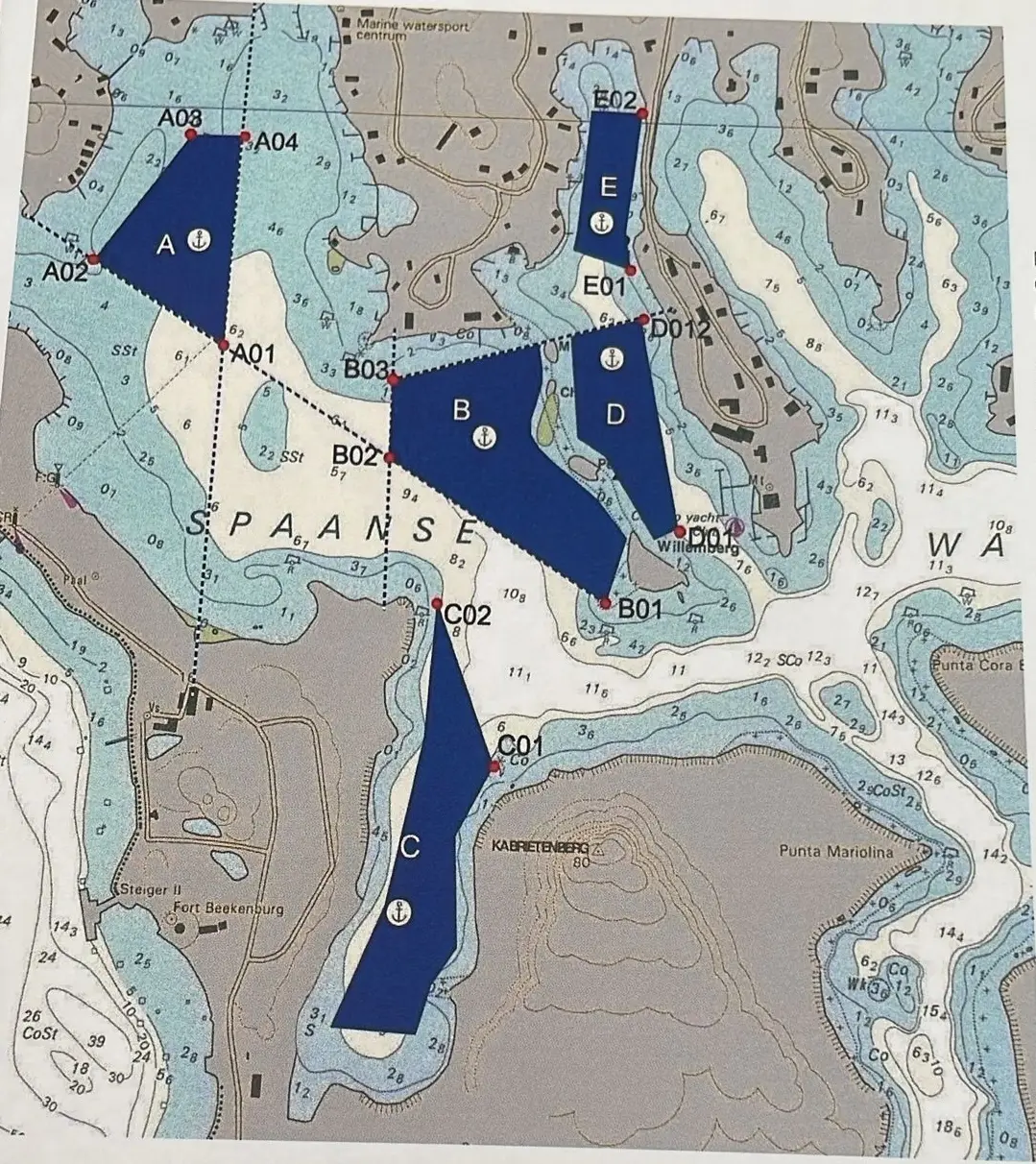
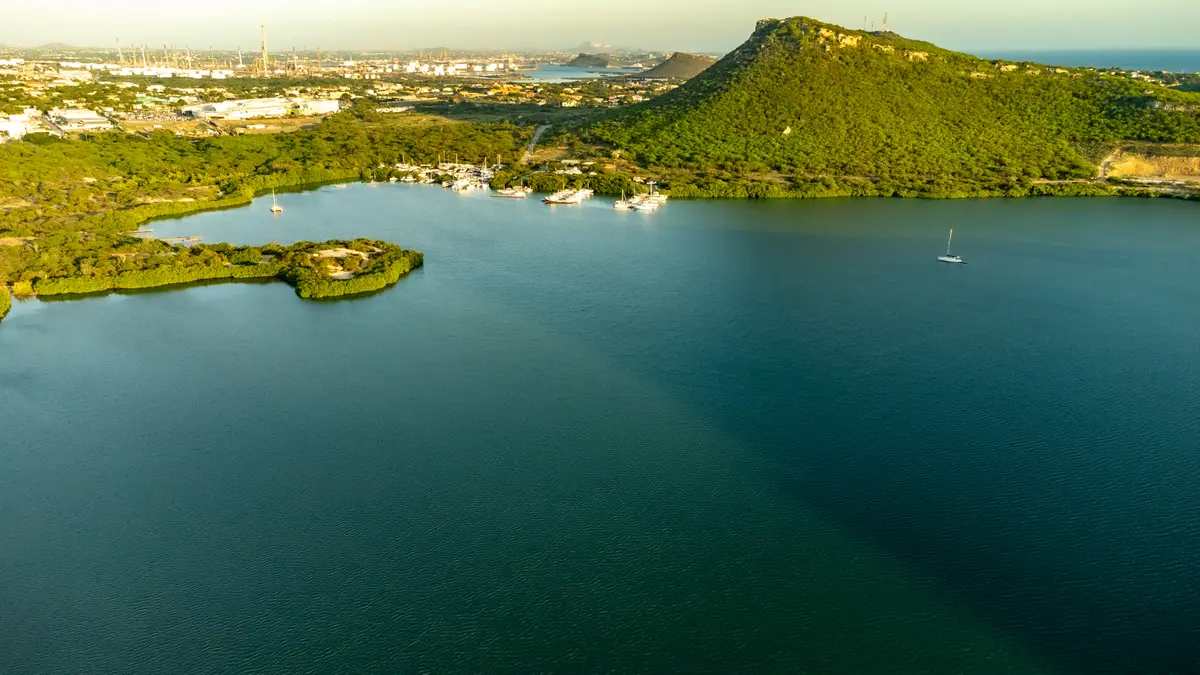
Spanish Water is a large, protected lagoon with five designated anchorage zones. Zones A, B, and C are the most commonly used by cruising sailors, while Zones D and E see little to no cruiser traffic.
Curaçao is a common stop for cruising sailors in the southern Caribbean, whether as a winter base, a repair stop, or a longer stay. This page focuses on Curaçao specifically from a sailor’s perspective — clearance, anchorages, marinas, provisioning, and the practical realities of living aboard.
I have spent several years living on Curaçao, not just passing through but staying long enough to understand how the island really works day to day. While my liveaboard sailing journey on Anima began in 2025, my time on shore gave me deep local knowledge that most short-term visitors never gain—where to find the right shops, which services are reliable, how logistics work, and what actually matters when you stay longer than a few weeks.
This page is not a brochure-style overview. It is a practical, sailor-focused guide that combines long-term local experience ashore with real-world cruising insights from life on board.
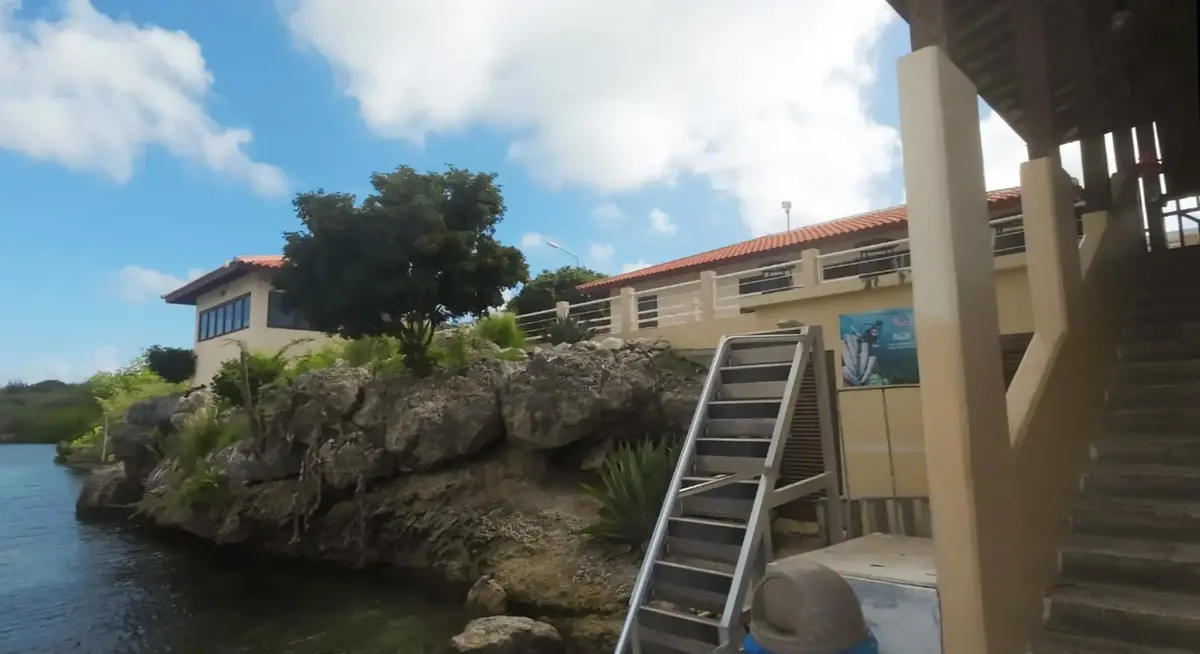
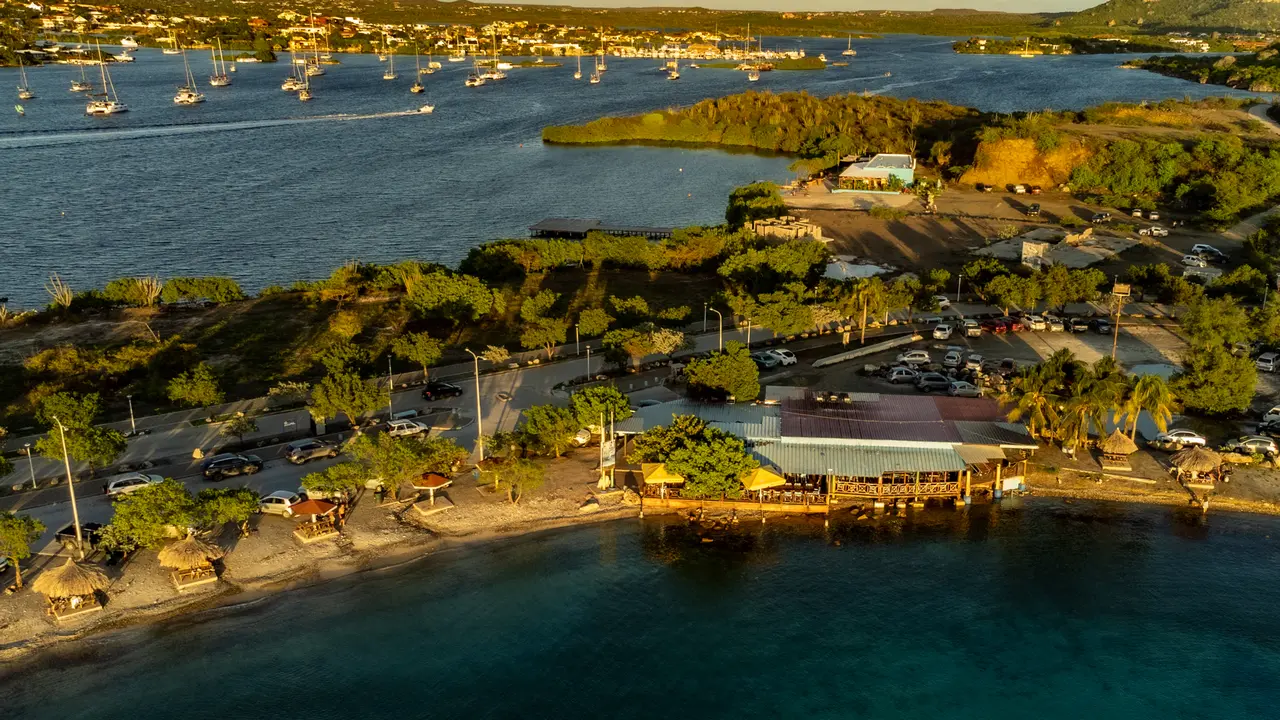
At the entrance of the lagoon, on the eastern side, there is a hotel complex (currently operated by Sandals). Directly next to the hotel property is a restaurant, and adjacent to it you will find the Immigration and Customs office for Spanish Water.
Current opening hours are:
- 10:00 – 12:00
- 15:00 – 17:00
If you arrive during office hours, you can dock briefly in front of the restaurant and complete clearance immediately. Submitting your arrival in advance via SailClear is strongly recommended and speeds up the process.
If you arrive outside of office hours, it is acceptable to anchor in Spanish Water first and return by dinghy during opening hours to complete clearance.
Important: In Curaçao, all crew members are required to appear in person at Immigration and Customs. Clearance cannot be completed by the captain alone.
Harbour Master & Anchorage Permit
After clearing in, it is mandatory to visit the Harbour Master’s office in Otrobanda to obtain and pay for the anchoring permit for Spanish Water.
- Current fee: USD 25 for three months
- Only the captain needs to appear in person
- The rest of the crew is not required at this stage
Even if you intend to move on to a marina afterward (such as Curaçao Marine Zone), it is still more convenient to clear in via Spanish Water. Immigration and Customs offices in town are spread out, making clearance there more time-consuming, involving either long walks or expensive taxi rides.
Clearing In via Curaçao Marine Zone (Marina Option)
If you plan to go directly to Curaçao Marine Zone, it is highly recommended to contact the marina in advance and announce your intended arrival. The marina is relatively small and can fill up quickly during high season.
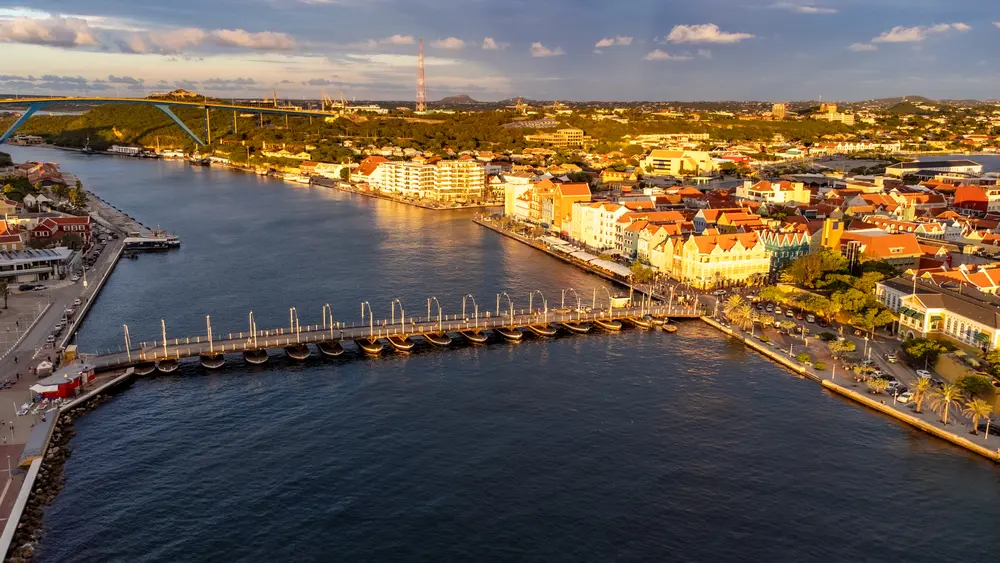
Access to the marina requires passing the Queen Emma Bridge, which must be opened by Port Authority. Contact is made on VHF Channel 12. Port Authority will ask whether your arrival at the marina has been announced or confirmed.
If you choose to complete clearance in town instead of Spanish Water:
- Arrival: Immigration first, then Customs
- Departure: Customs first, then Immigration
As of now, clearance is free of charge, although there have been discussions about introducing a future tourist or cruising fee.
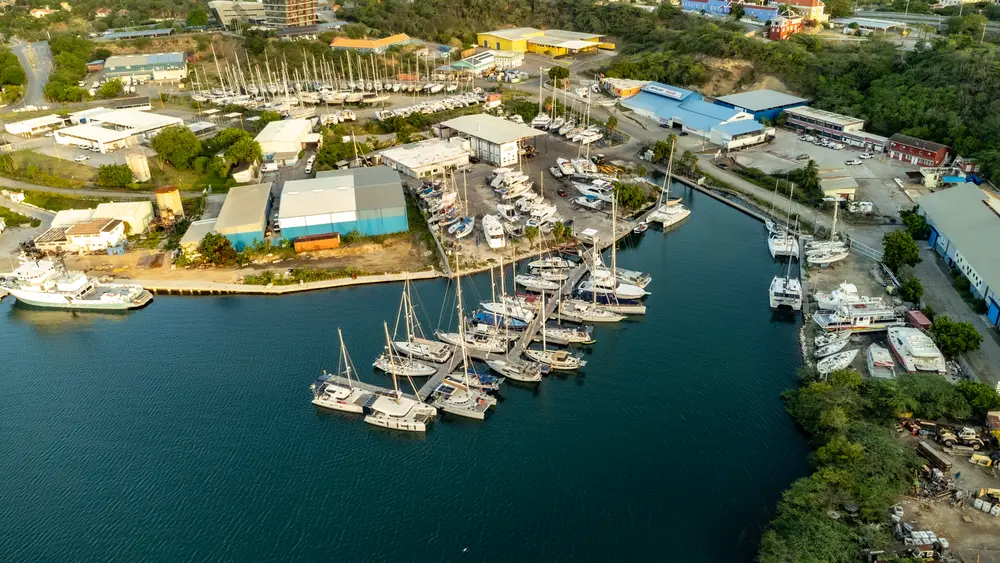
Anchorages in Curaçao – Spanish Water & Piscadera Bay
Curaçao has only a small number of usable anchorages for cruising sailors, and conditions can vary significantly depending on wind strength and direction. The two most relevant anchorages are Spanish Water Lagoon and Piscadera Bay. While Spanish Water is often described as the main cruiser hub, Piscadera Bay is, in many conditions, the calmer and more comfortable anchorage.
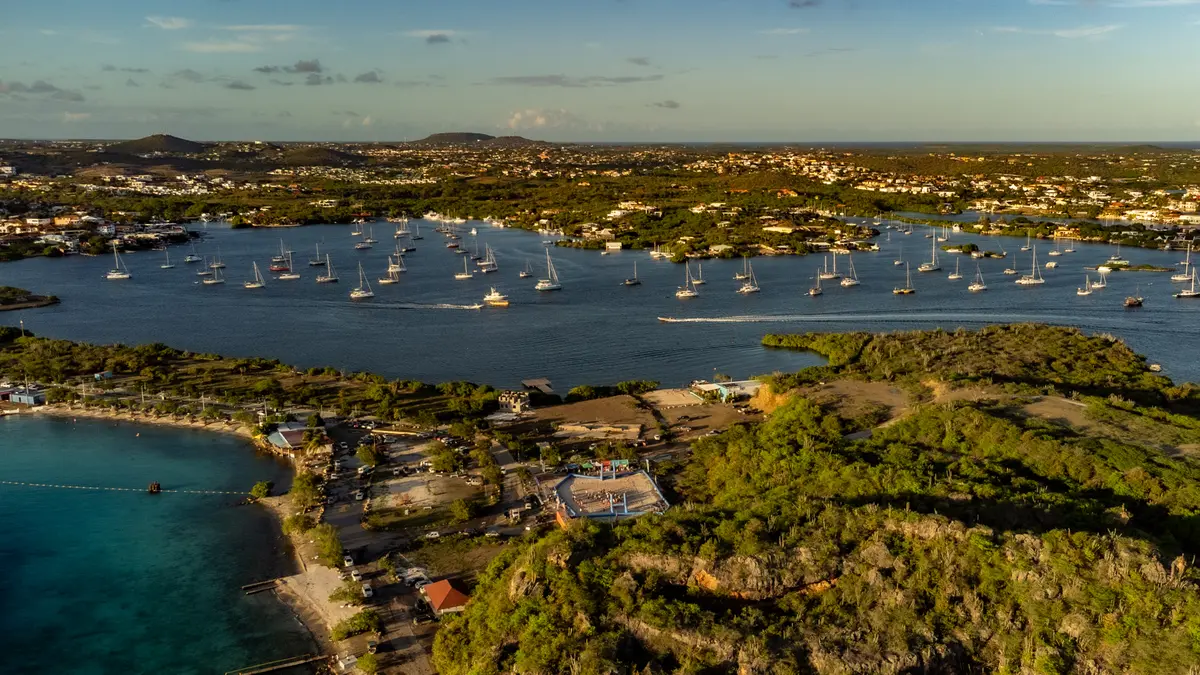
Spanish Water Lagoon (Cruiser Hub, Mixed Conditions)
Spanish Water is a large lagoon with five designated anchorage zones and can accommodate roughly 100 boats in total. Holding is generally good in mud, with typical depths between 5 and 10 meters, but conditions vary noticeably between zones.
Zones A and B can become rocky and uncomfortable during periods of sustained winds above approximately 25 knots. Some parts of these zones are exposed to swell, and in gusty conditions, boats do occasionally drag despite generally good holding.
The entry area of Zone C can also be exposed and uncomfortable. The only consistently calm part of Spanish Water is deep inside Zone C, where protection improves significantly. However, space there is limited, and typically only five to six boats can anchor comfortably.
Pros
- Large cruiser community and social life
- Regular sailor-organized activities, events, and happy hours
- Free supermarket shuttles
- Budget Marine and marine services nearby
- Snorkeling spots and watersports close by
- Convenient for longer stays and provisioning
Cons
- Some anchorage zones exposed in strong winds
- Gusty conditions can cause boats to drag
- Can feel crowded during high season
- Not all areas offer consistent comfort
- Heavy boat traffic (tour boats, fishing boats, jet skis)
Spanish Water works best if you value community, access to services, and activities, and are prepared to choose your anchorage spot carefully depending on conditions.
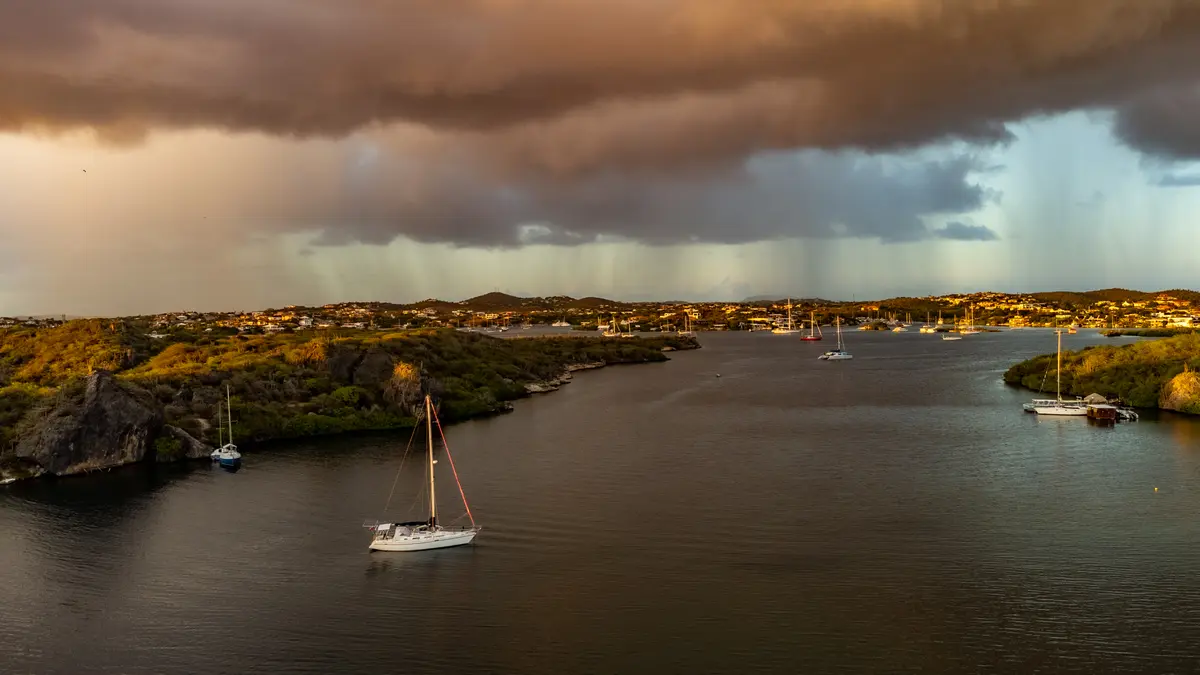
Piscadera Bay (Calm, Free & Underrated)
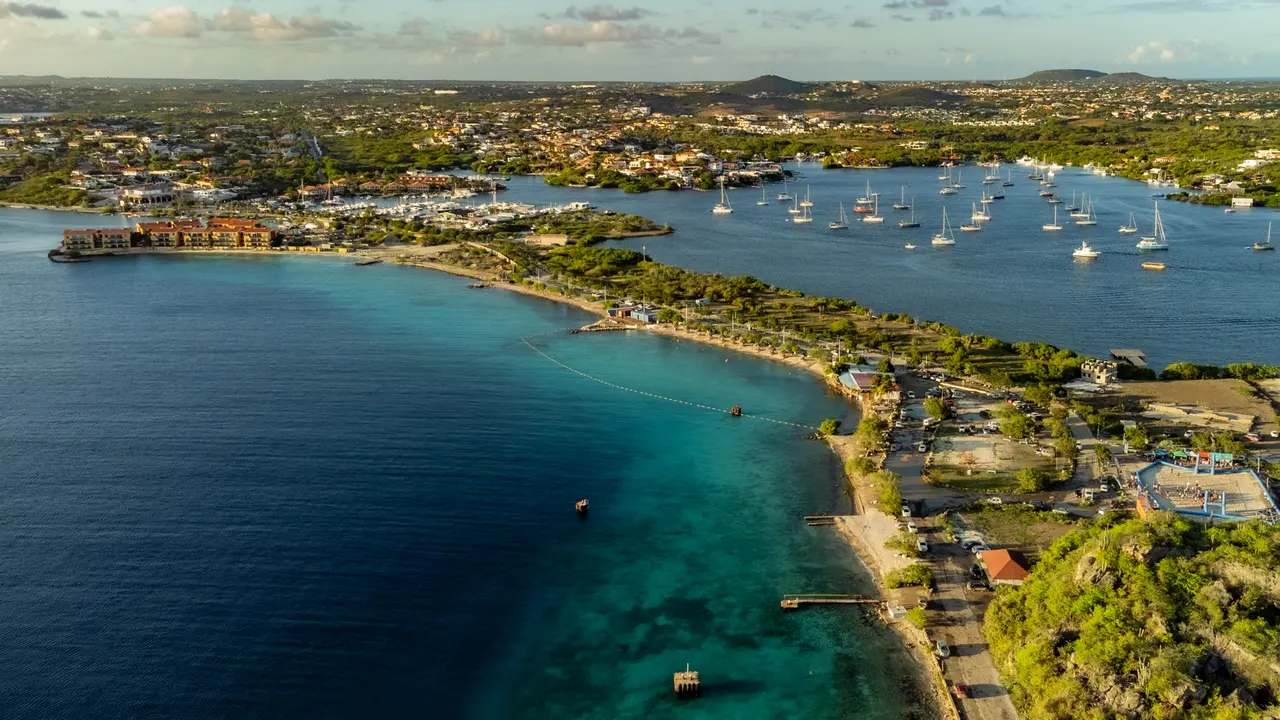
Piscadera Bay is often overlooked, but in practice it is one of the calmest anchorages on Curaçao, especially during periods of strong trade winds. The bay is well protected and typically less choppy than most parts of Spanish Water in windy conditions.
The anchoring ground is muddy with excellent holding, and depths are usually between 4 and 6 meters, making it comfortable and secure for most cruising boats.
Pros
- Very well protected and calm in strong winds
- Free anchoring (no permit required)
- Excellent holding
- Easy and stress-free entrance
- Plenty of space to anchor
- Noticeably slower growth of barnacles and fouling on anchor chain and hull
Cons
- Quiet, with limited social life
- Fewer services directly at the anchorage
- Only a small number of restaurants within dinghy distance
- Murky water and less inviting for swimming
- Poorly charted, with limited or missing depth information
A supermarket and the Sambil Shopping Mall are within walking distance, but overall Piscadera Bay is far less developed than Spanish Water.
Piscadera Bay is an excellent choice if you arrive at night, or if you are coming from the west (for example from Colombia or Aruba).
Piscadera Bay is still poorly detailed on many charts, which likely discourages some sailors. In practice, depths are generally sufficient for most cruising boats, and the entrance is straightforward when approached carefully. Staying near the center of the bay on entry provides safe water, and once inside there is ample room to anchor and assess conditions in daylight.
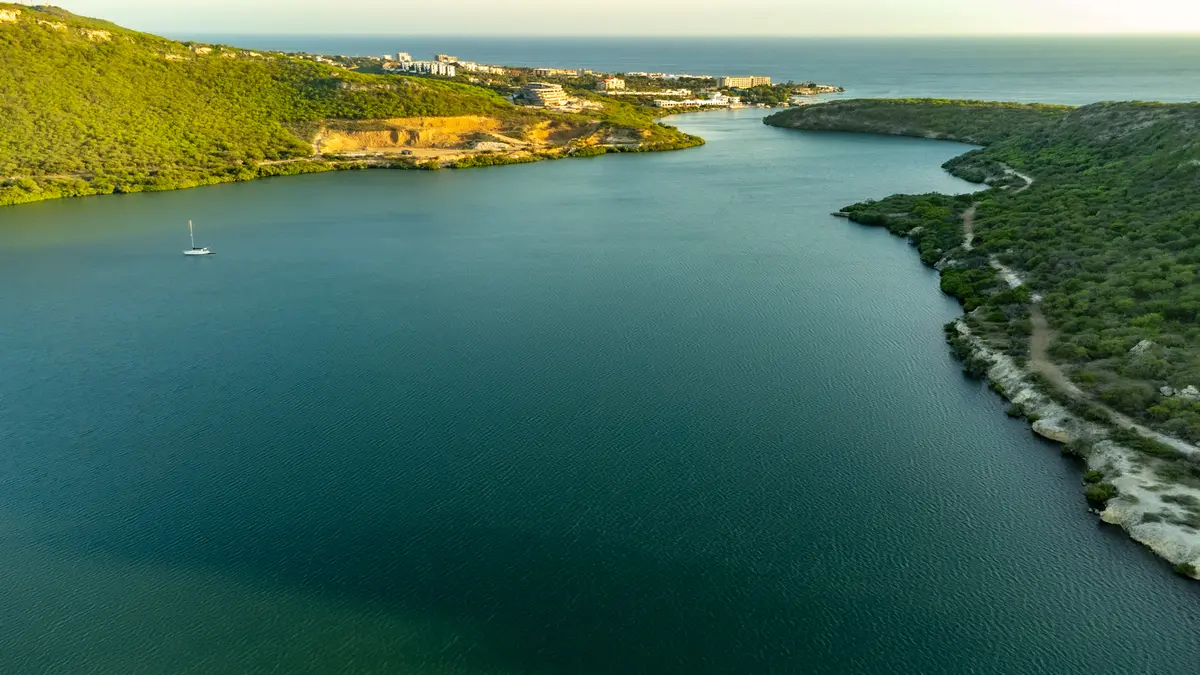
Provisioning & Shops for Sailors in Curaçao
Provisioning in Curaçao works well once you understand where sailors usually go and how to get around. While the island is not a one-stop provisioning hub, it offers reliable options for food, marine supplies, hardware, and technical items—especially if you plan your trips efficiently.
Free Supermarket Shuttle (Logistics over Preference)
For sailors anchored in Spanish Water, a free shuttle service makes provisioning considerably easier.
Vreugdenhil Supermarket Shuttle
- From Spanish Water: Monday & Thursday at 08:15
- From Curaçao Marine Zone: Daily at 09:30
- Return from supermarket: 11:00
Vreugdenhil is commonly used by sailors primarily because of the free shuttle service and its close proximity to marine and hardware stores, not because it is the best supermarket on the island. It is practical and functional, but many sailors use it mainly for convenience.
Nearby essentials
- Budget Marine – Close to the supermarket
- ATM next to Budget Marine (USD available)
- Dijtham Hardware – Across the street; good for tools, stainless steel, aluminum, fittings, and general hardware
This area allows sailors to combine provisioning and maintenance errands in a single trip.
Public Bus Access (Very Useful from Spanish Water)
Public buses are a reliable and inexpensive way to get around Curaçao, especially from Spanish Water. They connect key commercial areas such as Salina, Zeelandia, and Eden Mall, where many relevant shops are located.
Bus routes and schedules are operated by the local bus company and are easy to use once familiar with the system. Buses run regularly during the day and are commonly used by cruisers for provisioning and errands.
For current routes and schedules, refer to the local bus operator (Autobusbedrijf Curaçao).
Marine & Technical Stores (Salina Area)
The Salina area hosts several specialized stores and is easily reachable by public bus from Spanish Water.
- MTech – Electrical supplies, wiring, tools
- The Freedom Machines NV – Marine supplies with a focus on powerboats, but very useful for cruisers as well
(antifouling, epoxy, fillers, hardware, stainless steel)
Salina is a good stop when you need more technical items beyond basic chandlery stock.
Hardware, Electronics & Supermarkets (Zeelandia Area)
Not far from Salina lies Zeelandia, an important commercial zone for larger purchases.
- Kooyman – Large hardware and building supply store
- Building Depot – Additional construction and hardware materials
- High5 Electronics – Solar-related products (panels, wiring, components)
- Van der Tweel Supermarket – High-quality products, but on the expensive side
This area is useful for bigger projects or sourcing specific materials.
Supermarkets for Large Provisioning Runs
For bulk provisioning, a car or taxi is usually required.
- Centrum Supermarket – Personal favorite for overall value and selection
- Mangusa Hypermarket – Very large store with good prices, ideal for mass provisioning
These supermarkets are best suited for stocking up before longer passages or extended stays.
Budget-Friendly Option by Public Bus
- Esperamos Supermarket (Eden Mall)
Small but affordable and reachable by public bus from Spanish Water.
Limited variety of meat and fruit, but useful for basic items and quick restocks.
Fuel, Water & Basic Services (Spanish Water)
Within Spanish Water Lagoon:
- Two fuel stations (diesel and gasoline)
- Fishermen’s Harbor (close to Section A)
- Yacht Club (closer Section B & D)
- Water available at these locations
Tap water in Curaçao is of excellent quality and safe to drink.
Ordering Parts & Shipping to Curaçao
Marine supply availability on the island is limited. Even larger stores such as Budget Marine usually stock only fast-moving items. Special parts often need to be ordered, which can be slow and expensive if handled locally.
Many sailors choose to:
- Order parts directly from the US or Europe
- Use shipping agents such as:
- Caribbean Cargo Curaçao – Good rates for heavy or bulky items (batteries, dinghies)
- Ezone Curaçao
- SVB Germany ships to Curaçao (often via UPS); air freight up to ~30 kg is typically fast and reliable
Shipping to Curaçao Marine Zone is possible, and yachts in transit may benefit from tax exemptions.
Practical takeaway
- Spanish Water offers the best logistics and access
- Public buses are a viable and useful transport option
- Vreugdenhil is convenient, not exceptional
- Centrum and Mangusa are better for serious provisioning
- For major refits, importing parts yourself is usually the best solution
Beyond the Anchorage
It’s easy to let boat life become the entire story. There is always something to improve, repair or optimize. Weeks can pass inside the rhythm of anchorages, provisioning runs and small technical projects.
But the boat is only the vehicle.
Curaçao is one of those places where it’s worth stepping away for more than just an afternoon. Many of the island’s most beautiful beaches and landscapes are not accessible by boat. There are no mooring buoys, anchoring is restricted in most bays, and simply sailing along the coast doesn’t show what makes this island unique.
If you take the time — even a full week — Curaçao reveals a different character inland and along the rugged north coast.
Here are places worth exploring beyond the anchorage.
Willemstad – Punda & Otrobanda
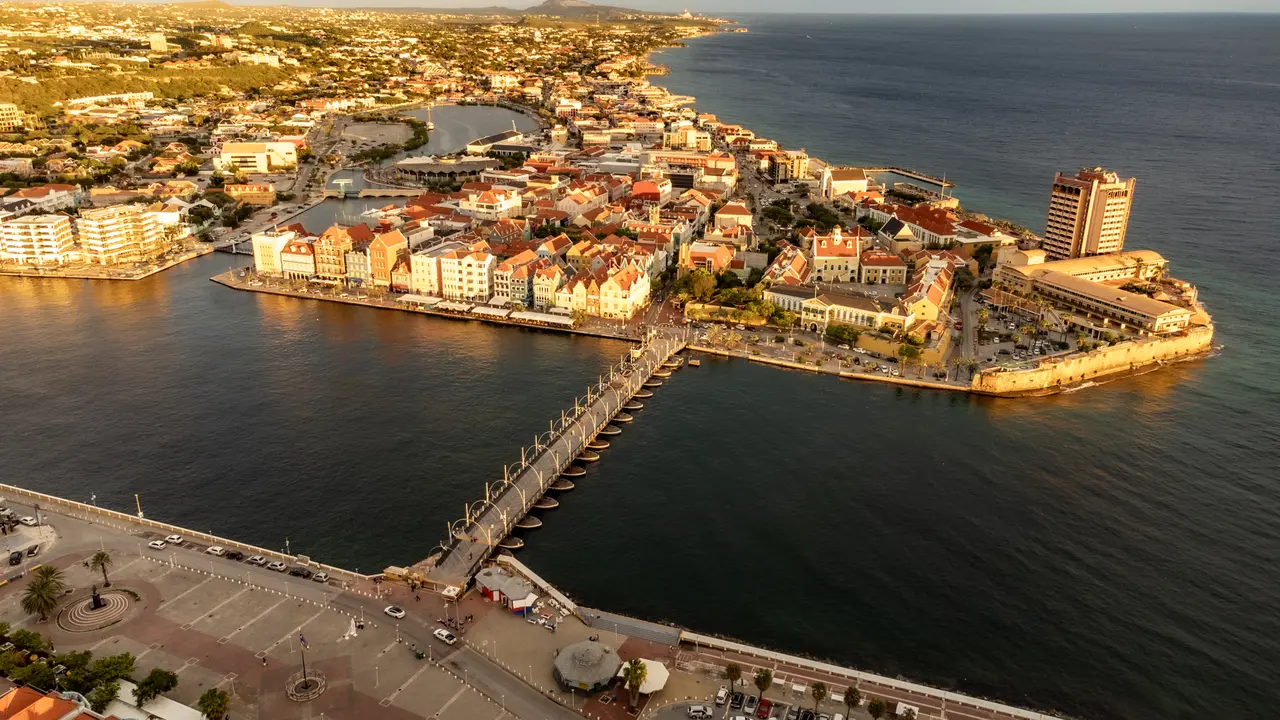
Even if you’ve been ashore for supplies, it’s worth slowing down and properly walking through the historic center. Cross the floating Queen Emma Bridge, wander through Otrobanda’s quieter streets, and take time in Punda beyond the waterfront strip. It’s the cultural heart of the island and feels very different from life in Spanish Water.
Chobolobo Liquor Factory
For a small cultural break, the historic distillery offers a glimpse into local production and Curaçao’s iconic blue liqueur. Easy to combine with a day in Willemstad.
Shete Boka National Park & Watamula
On the north coast, the island changes completely. Instead of protected bays, you’ll find dramatic cliffs and powerful Atlantic swell crashing into rock formations. Watamula, where waves surge into a natural basin, shows the ocean from the opposite perspective — standing on solid ground watching its force.
A rental car is essential here.
Santa Cruz Beach & The Blue Room
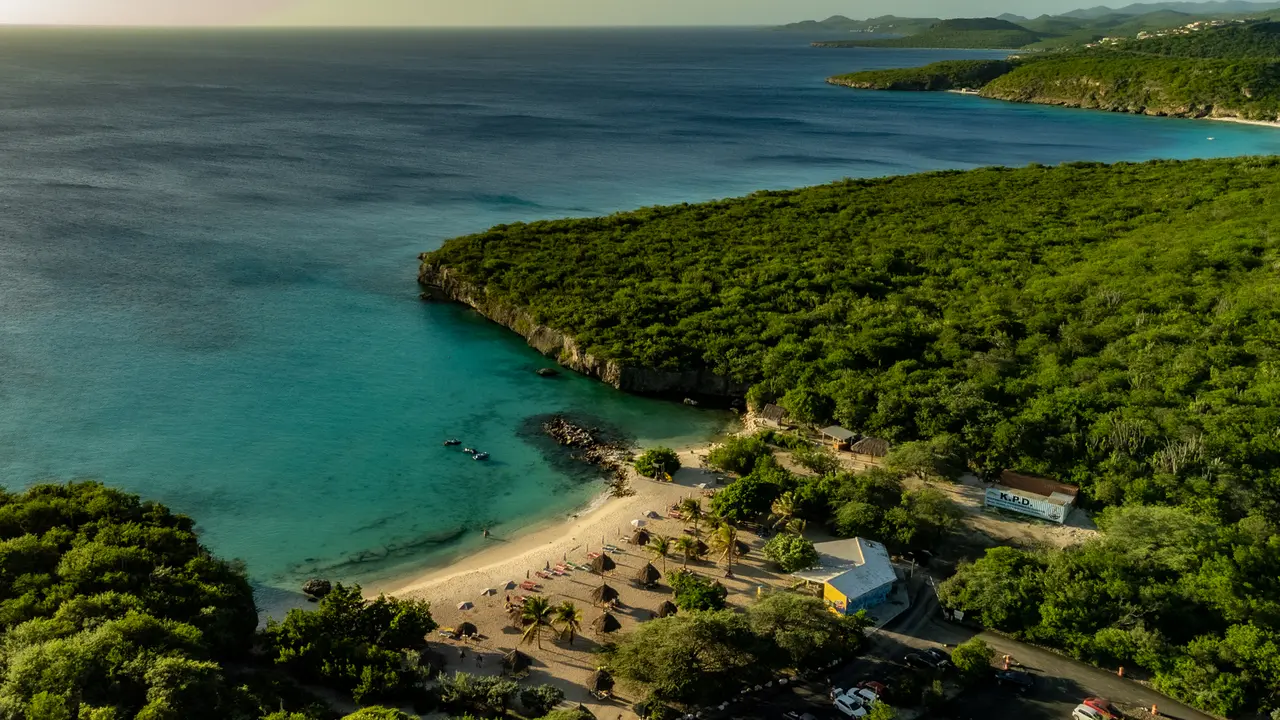
Santa Cruz is one of the few places where anchoring is allowed, but most visitors reach it by land. From here, a short hike leads to the Blue Room cave — a swim-through cavern where sunlight turns the water an intense blue. It’s a unique experience that you won’t get from simply sailing past the coastline.
Porto Mari, Cas Abao, Daaibooi, Kokomo & Knip Beaches
These west coast beaches are often featured in photos of Curaçao — and for good reason. Clear water, accessible snorkeling and calm bays. But unlike many cruising destinations, you can’t just drop the hook and swim ashore. Visiting them properly requires a car and a bit of planning, which makes them feel like a deliberate excursion rather than an extension of anchoring life.
Spending time ashore changes how you see the island. From the deck, Curaçao is a line of coastline. From inland, it becomes a landscape — shaped by wind, rock and history.
And sometimes stepping away from the boat for a few days is exactly what reminds you why you sailed here in the first place.
If you prefer not to rent a car but still want to explore inland, there are also organized tours available.