
November 30th, 2025
Boat Life Preparations in Curaçao
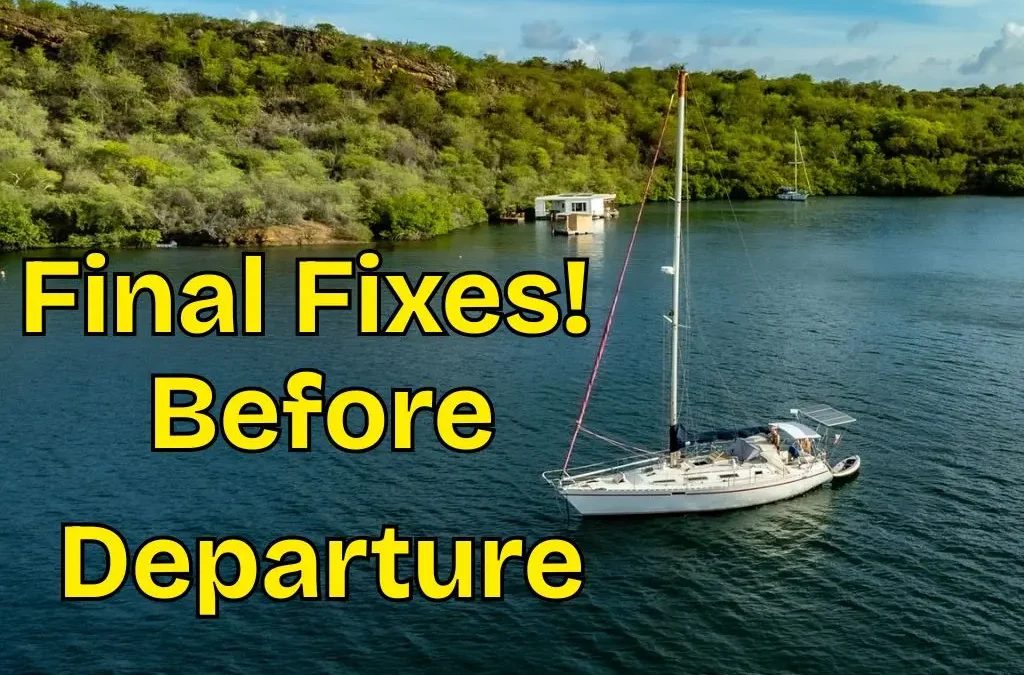
After months of repairs, upgrades, and unexpected delays, I’m finally getting closer to setting sail again. My Gibsea 402, built in 1990 and lovingly brought back from a neglected state, is almost ready for the next big Caribbean passage.
In this week’s preparations, everything revolved around electrical upgrades, essential engine maintenance, cleaning the hull, and working a stubborn issue with my onboard shower.
In this article, I’ll take you behind the scenes and share what really happens when you prepare a cruising sailboat for a long passage.
Wiring the House Bank & Installing the Battery Isolator
One of the biggest tasks was finally finishing the wiring of my house bank. I recently removed the last old battery on board, so the system is now running entirely on a single house battery. It’s not ideal — but it works for now.
To make sure the alternator charges properly, I installed and wired in a battery isolator.
This small device makes a huge difference:
- It protects the alternator ✔
- It ensures the house battery gets charged ✔
- It avoids any risk of backflow ✔
It sounds simple, but the reality was crawling around tight spaces, cutting and crimping thick cables, cleaning corroded connectors, and double-checking wiring diagrams.
But now it works — and that’s a big step toward being truly cruising-ready again.
Essential Engine Maintenance: Oil Change on the Perkins M50
Before any long-distance passage, the engine must be in the best possible condition.
Even if you plan to sail the whole way, the engine becomes your safety net when:
- wind drops,
- you need to maneuver in tight places,
- or bad weather forces you to motor out of danger.
This week I changed the oil on my Perkins M50, replacing the old oil with fresh 15W40 and installing a new oil filter. Simple job — but 100% necessary.
Every sailor knows: treat your engine well, and it will save you when you need it most.
Scraping Off Barnacles: Cleaning the Hull in Spanish Water
I originally planned to clean the hull in Piscadera Bay, but the visibility there is terrible. With water so murky that I could barely see my hands, scraping barnacles would have been a blind mission.
So after arriving in Spanish Water, I dove down to clean the hull properly.
What I found was… a lot.
Barnacles, algae, growth in places I didn’t expect — the usual surprise after a few months of anchoring.
Armed with my scraper, gloves, and patience, I spent a long session underwater removing everything. It’s tiring work, but after finishing, the boat feels faster, smoother, and more ready for the passage ahead.
The Mysterious Shower Problem
Boat life wouldn’t be boat life without at least one system refusing to cooperate.
This week’s troublemaker:
my shower pump system.
Everything should work — wiring, switch, pump, water flow — but it simply doesn’t behave as expected. Because there is no pump – it was disconnected.
It’s a problem I’ll need to revisit, but that’s just part of cruising life: solve what you can, prepare for what you can’t.
Planning an Upgrade to Lithium Batteries
Right now, I’m still running the entire house system on a single AGM battery. It works, but it’s not ideal for long-term cruising — especially when you rely on solar power and efficient storage.
That’s why I plan to upgrade to lithium LiFePO4 batteries soon.
Here’s why, and here’s what I am looking at (check out these products):
Why Lithium Batteries Are a Game Changer for Cruisers
Lithium batteries offer several advantages over AGM or lead-acid batteries:
⚡ More usable capacity – up to 80–90% vs. 50% with AGM
⚡ Much faster charging – perfect for solar and alternator
⚡ Lightweight – reduces overall boat weight
⚡ Long lifespan – often 3000+ cycles
⚡ Stable voltage output – ideal for fridges, inverters, and electronics
For anyone outfitting a cruising sailboat, switching to lithium batteries is one of the most impactful upgrades you can make.
➡️ If you’re considering upgrading your own boat, you can check out my recommended lithium setup here:
battery store
This will be one of the biggest upgrades I plan for the near future, before getting a water maker — especially before tackling longer passages in remote areas.
Final Thoughts Before the Passage
With every fix and every upgrade, I’m getting closer to casting off again.
Preparation days can be long and exhausting, but they’re also rewarding — every repaired system adds confidence for the journey ahead.
The next steps?
Keep watching the weather window, finalize the remaining tasks, and soon… set sail for the next Caribbean island.
Thanks for following along on this adventure, and feel free to check out my latest YouTube episode for the full behind-the-scenes video.
👉 Subscribe to my YouTube channel so you don’t miss the next installment of “What Broke This Week?”
If you enjoy following my sailing adventures and DIY projects, please like, comment, and subscribe — it helps the channel grow and keeps the journey going.
Or join me on Patreon
Cheers
Paul – SY ANIMA