
December 7th, 2025
All Upgrades, Costs & Lessons From a $23,000 Refit
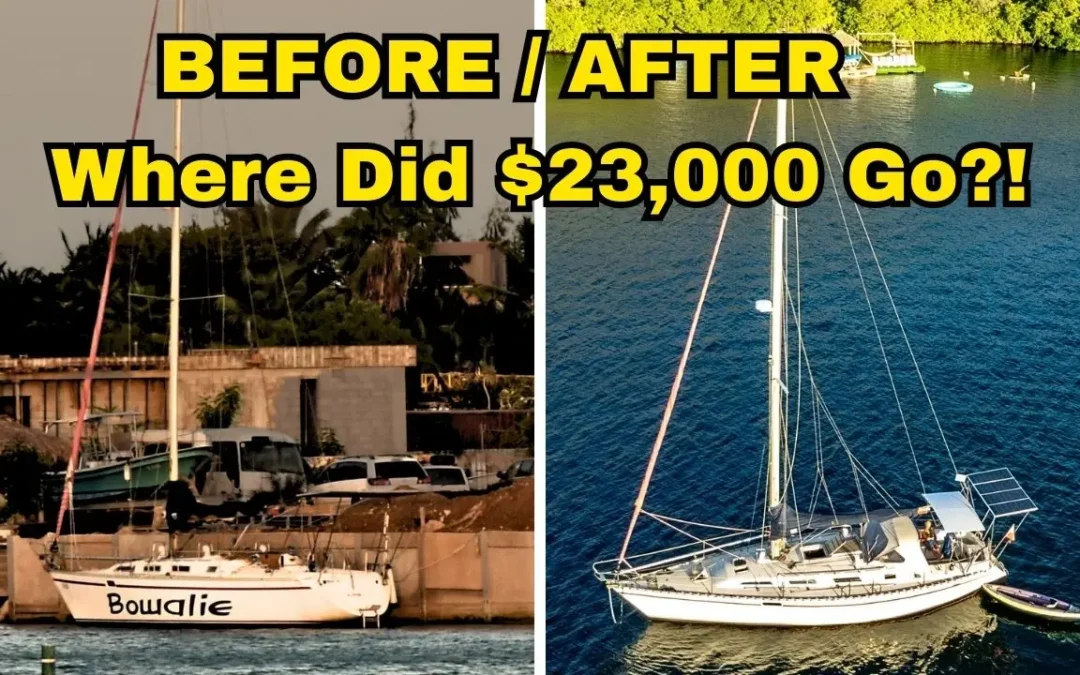
When I bought my sailboat, she wasn’t the pristine, polished cruiser you see in glossy magazines. She was tired, neglected, and full of hidden surprises. But she had good bones — and that was enough for me. What I didn’t realize back then was how much time, money, and sweat it would take to bring her back to life.
In this post, I’m sharing every upgrade, every unexpected project, and the real cost of restoring a neglected boat:
$23,000 so far — and counting.
Whether you’re dreaming about boat life, already restoring your own yacht, or simply curious about what goes into fixing up an older cruiser, this breakdown will give you a full inside look from start to finish.
Why I Bought a Neglected Boat in the First Place
Some people buy boats ready to sail.
I bought a project.
The sailboat had been sitting for years in the Caribbean heat, exposed to sun, salt, dust and heavy rains. The deck hardware was old, the rigging was worn, and the interior had definitely seen better days. But deep down, I knew she could sail again — with enough patience and the right upgrades.
This project became more than a refit. It became a journey, a challenge, and sometimes a test of willpower. But looking at the boat today, I can finally say the work was worth it.
The Total Cost of Restoring My Neglected Sailboat
Let’s get straight to the number most people ask about:
**💰 Total cost of upgrades, tools, parts & marina fees so far:
👉 $23,000**
This includes major systems, safety gear, interior repairs, rigging, electronics, and even the smaller items that slowly build up the bill.
Below is the full breakdown.
The Complete Upgrade List
1. Running Rigging — $950
Every single line on the boat was worn out. Replacing the halyards, sheets, reefing lines, and control lines was essential not only for performance, but for safety. Fresh rope also made the boat feel instantly newer.
2. Rocna 25 kg Anchor + 10 mm Chain — $2,300
A neglected boat often comes with neglected ground tackle.
Anchoring safely in the Caribbean? Non-negotiable.
Upgrading to a Rocna 25 kg and 60 meters of 10 mm chain was one of the best decisions I made. It’s heavy, yes — but the peace of mind is priceless.
3. New Windlass — $1,160
The old windlass was dead, corroded, and unreliable.
With the new heavy chain and anchor, replacing the windlass became mandatory. This upgrade transformed anchoring from a workout into a smooth routine.
4. Sta-Lok Terminals — $800
My rigging took a hit, when my backstay tesnioner broke. The shroud terminals got cracks and weren’t safe anymore. I decided to replace them and switch to Sta-Loks for added reliability. This also allowed me to replace fittings myself without needing a swaging machine.
5. Chartplotter + Caribbean Charts — $1,023
Navigation is the heart of safe cruising. The new chartplotter finally gave me:
• AIS overlays – soon to come as I upgrade my VHF with AIS
• Updated depth contours
• Reliable routing
• Proper night mode
I can’t imagine sailing without it now.
6. Fridge Upgrade — $200
The original fridge didn’t work, fixing it was too costly. With just a small investment, I could install a basic fridge system that now runs efficiently with my power setup.
7. Starlink Maritime Setup — $500
This was a game changer.
Starlink allows me to upload videos, run my channel, stay in touch, and work remotely — all from anchor.
For modern boat life, this upgrade is almost essential.
8. New Batteries (Starter + House Bank) — $630
- Starter battery: $230
- House battery: $400
My next goal is to install a proper lithium system, but for now, the new small AGM batteries have to do the job.
Thinking about upgrading to lithium?
Lithium batteries offer far more usable capacity, weigh less, charge faster, and last significantly longer. If you’re living aboard or running power-hungry systems like refrigeration or Starlink, lithium is absolutely worth considering.
👉 If you want to see the lithium batteries I plan to use, you can check them out here.
9. Saltwater Foot Pump — $80
A small upgrade with a huge impact.
This pump lets me wash dishes without wasting fresh water — and on a boat, every liter counts.
10. Lexan Windows — $750
The old windows were crazed and leaking. Replacing them with Lexan not only stopped the leaks but transformed the look of the boat. Suddenly the interior felt brighter and fresher. Lexan is a little bit more expensive, but durable and safer.
11. Interior Repairs: New Panels, Ceiling & Finish — $500+
One of the biggest tasks was fixing the interior after water intrusion. I replaced:
• PVC ceiling panels
• Plywood backing
• About 8 meters of marine leather
• Several support pieces
• Varnish, paint & sealants
It was dusty, sticky, sweaty work — but now the interior looks completely different.
12. Antifouling — $1,000
The hull was badly fouled and needed serious attention. After scraping barnacles and cleaning, I discovered a lot of Osmosis. I treated this task first, then I applied multiple coats of antifouling to keep growth under control.
13. Tools, Epoxy & Materials — ~$1,000
You can’t restore a boat without the right tools — and you always need more than you think. From grinders to epoxy kits to sandpaper, this category adds up fast.
14. Boat Registration & Polish Flag — $550
Not an upgrade in the traditional sense, but required to sail internationally.
What I Learned From Spending $23,000 on a Neglected Boat
1. Everything takes longer than expected
A “quick fix” often turns into a full-day job.
2. Hidden costs are real
Sealants, connectors, parts, tools — they sneak up quietly.
3. Do the safety upgrades first
Rigging, anchor, chain, and batteries were the best decisions I made.
4. Document everything
Photos, receipts, notes — future you will be grateful.
5. A neglected boat can still become a dream boat
It just takes time, patience, and a sense of humor.
Was It Worth It?
Looking at the boat today, my answer is simple:
Yes. Absolutely.
The boat is finally safe, strong, and ready for the next chapter — a real offshore passage across the Caribbean before upgrading my house bank to lithium batteries and more solar power. Even though the refit pushed me to my limits at times, I’m proud of what I’ve accomplished.
If you’re thinking about buying a project boat yourself, I hope this breakdown helps you understand what it takes — and inspires you to give a neglected boat a second chance.
👉 Subscribe to my YouTube channel so you don’t miss the next installment of “About the struggles of the Week?”
If you enjoy following my sailing adventures and DIY projects, please like, comment, and subscribe — it helps the channel grow and keeps the journey going.
Or join me on Patreon
Cheers
Paul – SY ANIMA