December 14th, 2025
My Attempt to Sail from Curaçao to St. Martin
Some departures feel different right from the start.
I left Curaçao with optimism, good forecasts, and that familiar mix of excitement and respect that comes with any offshore passage. The plan was simple: finally point the bow north and sail toward St. Martin. The weather models promised around 17 knots, even slightly from the southeast — not perfect, but manageable. A three-day window that looked good enough to give it a try.
Reality, as the ocean likes to remind us, doesn’t always follow the forecast.
Stronger Than Expected
Already on departure, the wind was sitting closer to 25 knots, straight from the east. Not ideal, but still within reason. I told myself it would ease with distance from the island. Instead, it built.
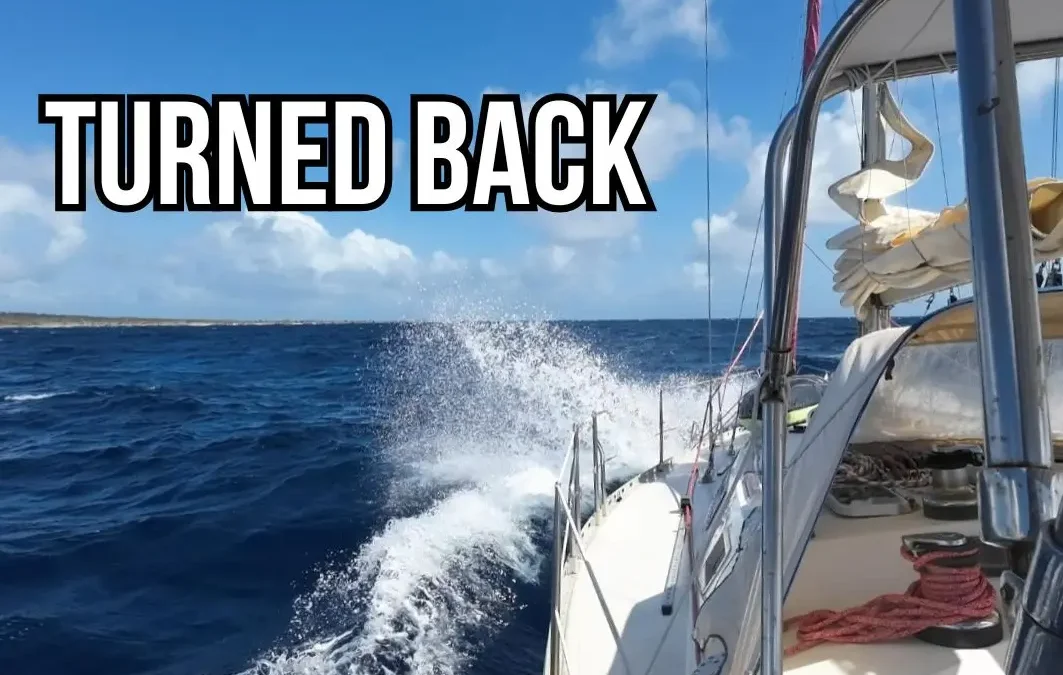
As I pushed on and approached the northern side of Bonaire, the wind increased further — 30 to 35 knots, right on the bow. The waves grew steeper, more aggressive, smashing into the hull and sending water rolling over the deck. Progress became slow and exhausting, both for the boat and for me.
My intended course toward St. Martin felt less and less realistic. In fact, the heading started to make more sense for Puerto Rico than for where I actually wanted to go.
When Things Start Breaking
Then came the moment that sealed the decision.
The constant pounding loosened my anchor just enough to allow it to move. And once a 25-kilogram anchor starts swinging, it doesn’t need much space to do damage. One solid hit was enough — my navigation lights never stood a chance.
Anchor versus nav light is not a fair fight.
With worsening conditions, damaged equipment, and no sign of calmer seas ahead, the question was no longer if I could continue — but whether it would be smart to do so.
Turning Back Isn’t Failing
Turning around offshore is never an easy decision. It feels like giving something up. But sailing isn’t about stubbornly pushing forward — it’s about making the right call when conditions change.
I bore away south and aimed for Bonaire instead. The difference was immediate. The boat relaxed, the motion softened, and suddenly it felt like I had made peace with the sea again.
I reached Bonaire at 2 a.m., picked up a buoy in the dark, and finally allowed myself a few hours of sleep.
Night at Sea: Dark, Beautiful, Honest
That night offshore had its own kind of magic.
A pitch-dark night has one big advantage: you can’t really see how big the waves are. You feel them, of course, but your eyes aren’t constantly reminded of their size. Instead, the darkness sharpens everything else.
The night sky was absolutely stunning — stars stretching from horizon to horizon, uninterrupted by city lights or land. And in the darkness, the waves revealed themselves only through their white, foamy crowns, briefly glowing as they broke and vanished again. Fleeting, powerful, beautiful.
Even in difficult moments, the ocean still knows how to deliver wonder.
Back to Curaçao
The next morning, I left Bonaire and sailed back to Curaçao. Two days after my initial departure and roughly 90 nautical miles later, I was back where I started — clearing in again, taking stock, and beginning small repairs.
The trip didn’t go as planned. St. Martin will have to wait.
But this wasn’t a failure. It was part of the journey. The boat taught me something, the ocean reminded me who’s in charge, and I gained more confidence — not from success, but from making the right decision when it mattered.
There will be another weather window. Another departure. Another attempt.
And next time, I’ll be ready.
👉 Subscribe to my YouTube channel so you don’t miss the next installment of “About the struggles of the Week?”
If you enjoy following my sailing adventures and DIY projects, please like, comment, and subscribe — it helps the channel grow and keeps the journey going.
Or join me on Patreon
Cheers
Paul – SY ANIMA