
My anchor setup on SV ANIMA
Dedicated Lithium Battery for My Electric Anchor Windlass
Boat: GibSea 402
Windlass: Quick 1000 W
Anchor: 25 kg Rocna
Chain: 200 ft / 10 mm
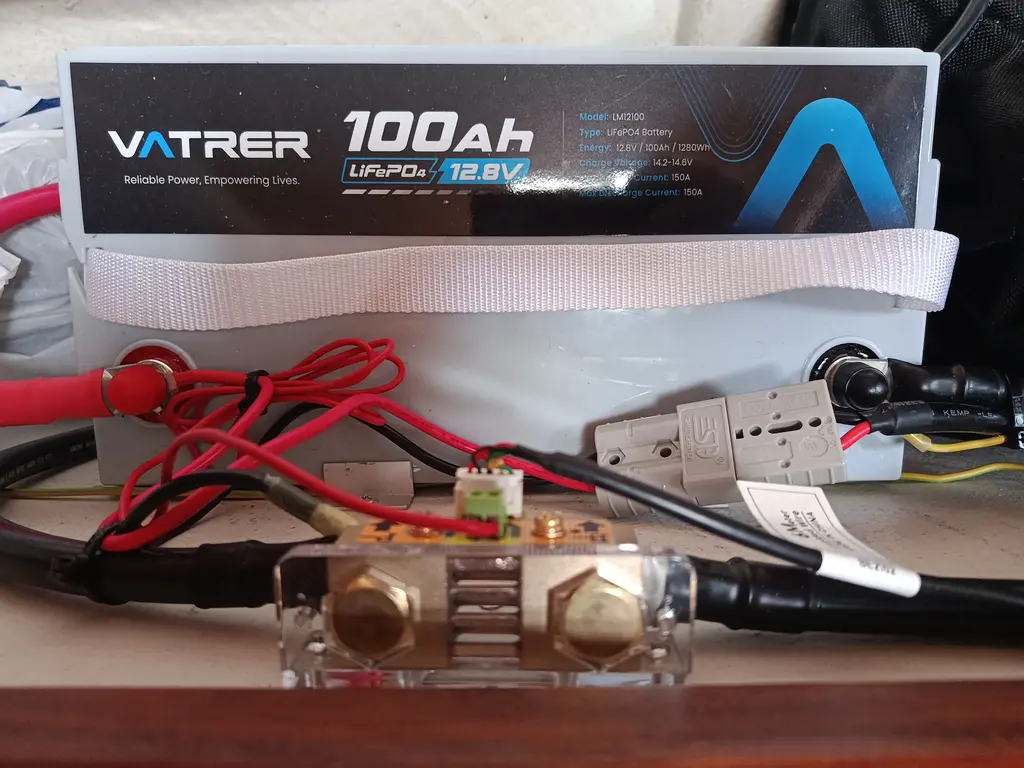
Battery: 100 Ah LiFePO4, 150 Ah BMS
Cable: 1/0 AWG
Fuse: 300 A MEGA
Breaker: 150 A
Last updated: June 2026
Why I Changed the Entire Ground Tackle
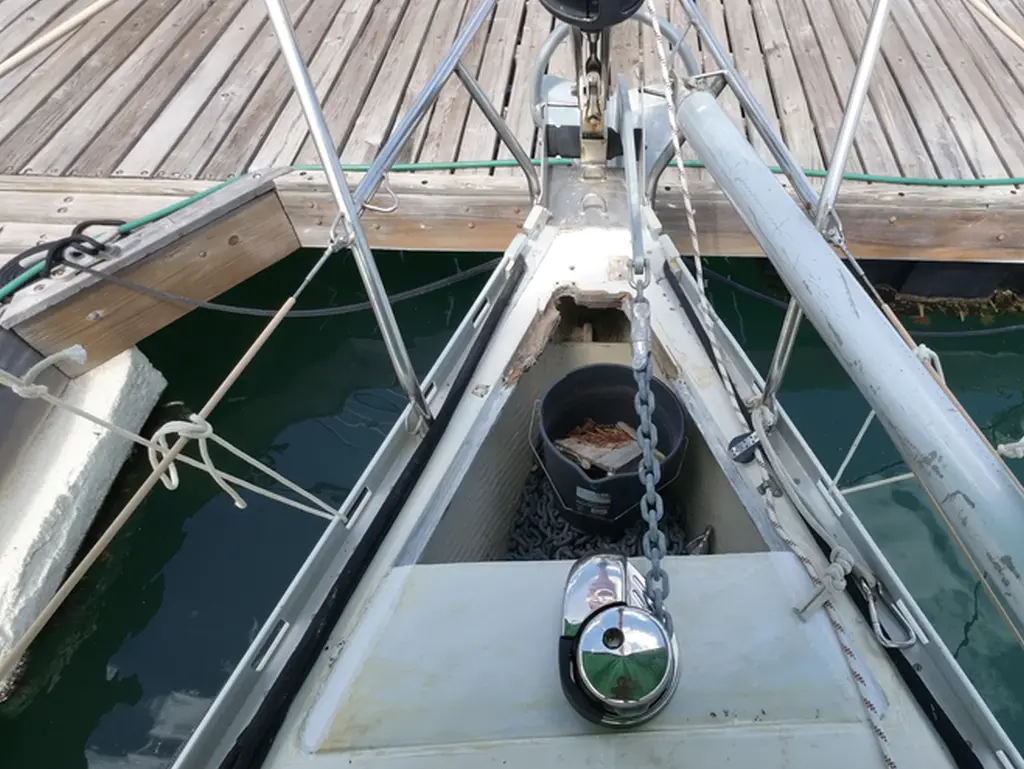
When I bought Anima, the ground tackle was designed for her previous life as a day charter catamaran in Bonaire. She carried an 8 kg anchor, around 10 feet (3 m) of 8 mm chain, and a long rope rode.
For day trips in Bonaire this was sufficient because anchoring is generally prohibited. The anchor was essentially an emergency backup rather than equipment intended for regular use.
For long-term cruising, however, this setup was completely inadequate.
The first major upgrade was replacing the original anchor with a 25 kg Rocna and 200 feet (60 m) of 10 mm chain.
That immediately created two new challenges:
- The original manual windlass was heavily corroded and needed replacement anyway.
- Its position on the foredeck had been designed around the much smaller anchor.
Because the Rocna extends much farther aft when stowed, the original windlass location—directly below the headsail furler—no longer worked. A complete redesign of the installation became unavoidable.
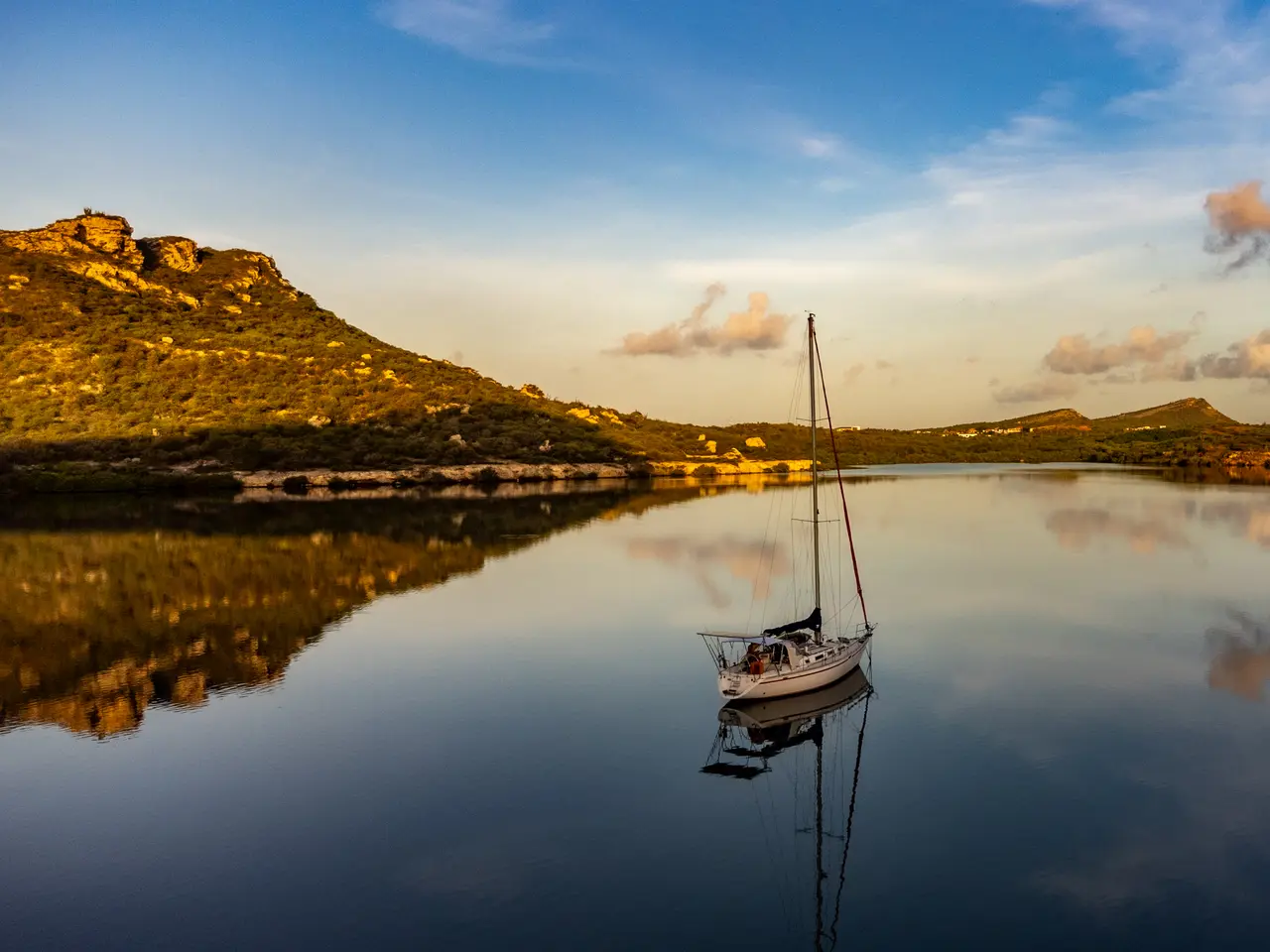
Watch the Complete Project
Prefer watching instead of reading?
In this video, I show and explain the installation, demonstrate the system in action, and share the real-world measurements and lessons I’ve learned after using it aboard Anima.
If you’re looking for additional technical details, specifications, or long-term updates, simply continue reading below.
Choosing the Windlass
I decided to install a Quick 1000 W electric windlass with a 10 mm gypsy.
The windlass was ordered from SVB Germany and shipped directly to Curaçao.
One advantage of ordering from SVB while living outside the European Union is that exports are supplied without European VAT. Instead, you only pay the applicable import duties and taxes in the destination country.
In my case, UPS handled the shipment, and I was able to collect it directly from their office in Curaçao – delivery to Curacao Marine Zone would have been possible as well.
Why I Installed a Dedicated Battery
One of the biggest decisions was how to power the windlass. Many boats run the windlass directly from the house battery bank.
I chose a different approach.
I installed a dedicated lithium battery exclusively for the windlass, mounted inside the V-berth close to the bow.
The main reason was simple:
Cable length and separation of the electric load.
If the windlass had been powered from the main batteries, the cables would have needed to run from the stern to the bow and back again. That would have required several additional meters of very heavy copper cable, adding significant cost and possible voltage drop.
By placing the battery only a short distance from the windlass, the power cables remain short and more efficient.
Another reason:
Even if the house batteries were heavily discharged after several cloudy days, I still wanted the windlass to have its own fully charged power source.
When weighing anchor in strong wind or current, having reliable power available for the windlass provides an additional margin of safety.
Battery Installation
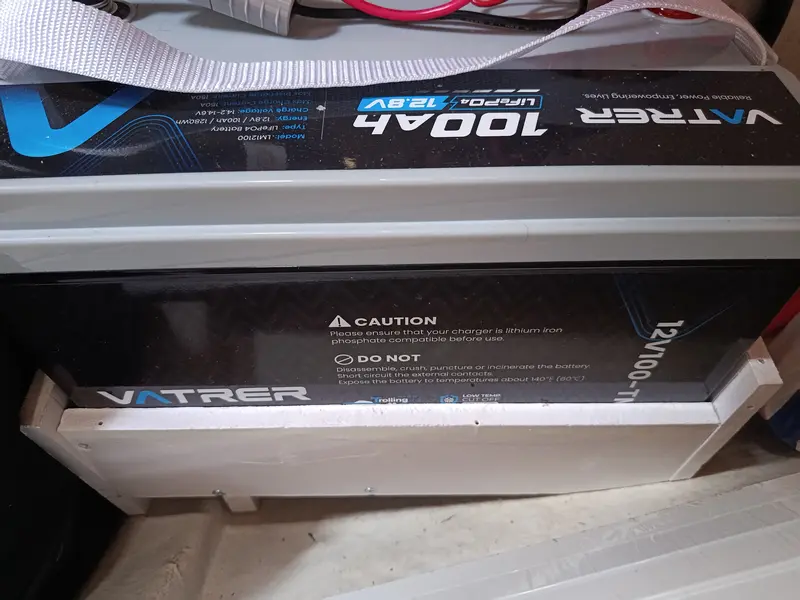
The battery is mounted in a custom-built PVC cradle that I constructed specifically for this installation. Instead of marine plywood, I built the battery cradle from 9 mm and 19 mm PVC board.
I chose PVC for several reasons:
-
- completely waterproof
- lighter than plywood
- easy to machine using standard tools
- sufficiently strong for this application
- does not support combustion
During my own testing, the material softened a little bit and became charred when exposed to a flame, but it did not continue burning once the flame was removed.
The cradle is securely bolted to the centre bulkhead inside the V-berth and firmly restrains the battery so it cannot move even in rough seas.
Since lithium batteries are relatively light compared to large AGM batteries, positioning it in the bow adds only a modest amount of weight while greatly simplifying the electrical installation.
Electrical Layout
The electrical system is intentionally simple.
Negative Side
Battery
↓
Shunt (battery monitor)
↓
Windlass
Installing the shunt allows the battery monitor to record:
-
-
- current draw
- battery voltage
- amp-hours consumed
- state of charge
-
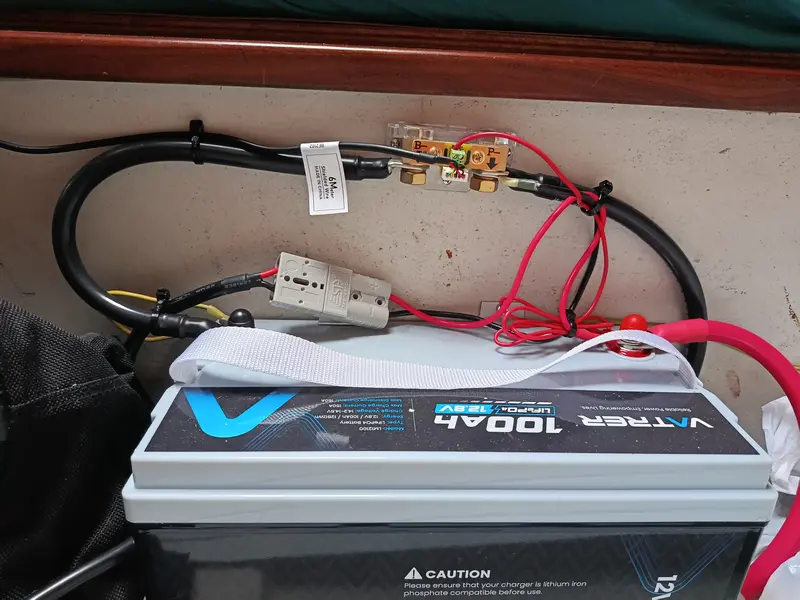
Positive Side
Battery
↓
300A Mega Fuse (missing in that photo)
↓
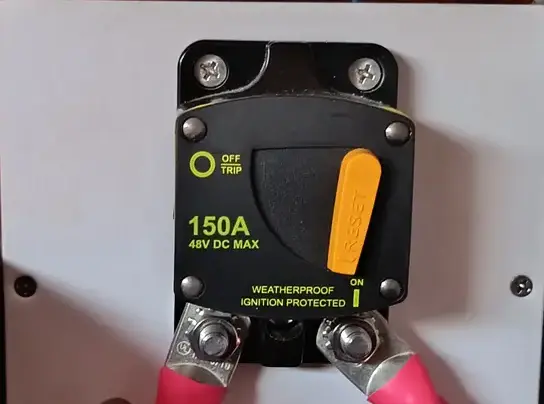
150 A circuit breaker
↓
Windlass relay (contactor)
↓
Windlass motor
The breaker provides over-current protection while also acting as a convenient disconnect switch.
Cable Selection
High-current installations such as an electric windlass require careful cable sizing.
For this installation, I used 1/0 AWG (53mm) marine cable for both the positive and negative conductors.
The negative cable runs approximately 2.5 metres (8.2 ft) from the battery, through the battery monitor shunt, to the windlass.
The positive cable is approximately 20 cm (8 in) longer because it passes through the 150 A circuit breaker and the windlass relay before reaching the motor.
To terminate the cables, I used high-quality tinned copper cable lugs and a hydraulic crimping tool, ensuring strong, low-resistance connections capable of handling the high currents drawn by the windlass.
With measured currents of around 100 A continuously and peaks approaching 200 A, proper cable sizing and professionally crimped terminals are just as important as choosing the right battery.
Battery Protection
Although the battery is located only a short distance from the windlass, I still wanted to protect the installation against short circuits.
Therefore, I installed a 300 A MEGA fuse directly at the positive battery terminal. This protects the cable between the battery and the rest of the system.
On the negative side, the battery monitor shunt includes its own 500 A fuse, which was supplied as part of the monitoring system.
Measured Performance
Continuous current: ~100 A
Peak current: up to 166 A
Power: approx. 1200 W
Voltage drop: 13.4 → 12.1 V
Typical energy per anchoring manoeuvre: 4–5 Ah
Charging the Windlass Battery
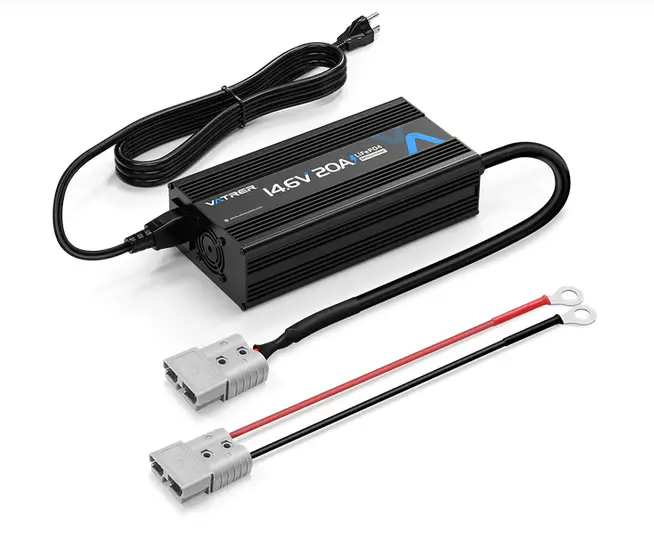
At the moment, the battery is charged using a standard 230 V LiFePO₄ charger connected to the inverter. Many people would probably expect a DC-DC charger, but I intentionally decided against it.
The reasons were:
-
- Money.
- Still money.
- Avoiding another long run of heavy copper cable.
Installing a DC-DC charger would have required another pair of cables running from the house bank to the V-berth. Although they wouldn’t need to be as large as the windlass cables, they would still have to carry approximately 20 A continuously, adding cost, weight and installation complexity.
By using the charger I order with the batteries, I only needed a standard 230 V outlet in the V-berth.
An unexpected advantage is that I can decide exactly when the windlass battery is charged.
On cloudy days, when solar production is limited, I simply don’t charge it and reserve the available energy for the house bank. Once the house batteries are full and there is excess solar power available, I switch on the charger and top up the windlass battery.
Since the windlass only consumes energy for short periods while anchoring, it doesn’t need to be permanently connected to a charging source.
Remote Control
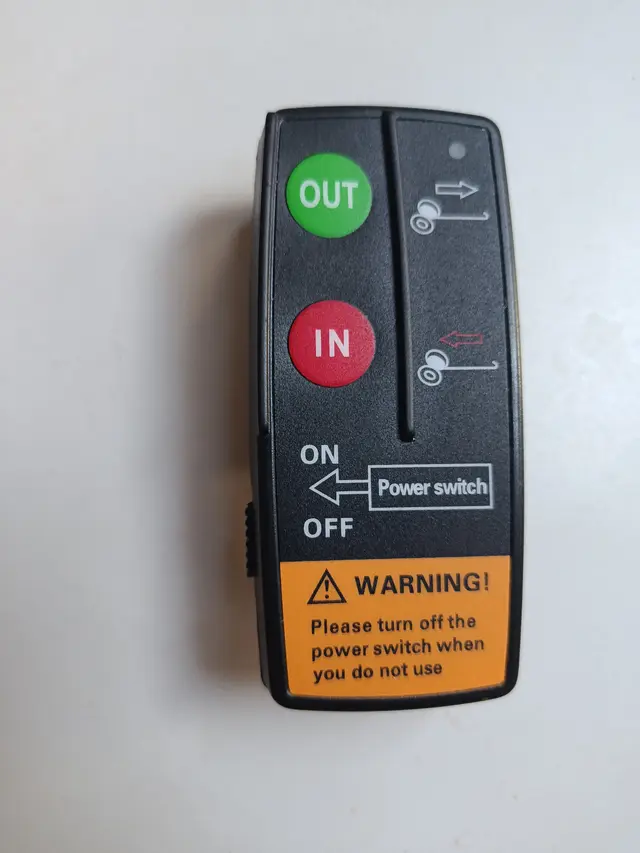
Instead of installing traditional foot switches on deck, I opted for a wireless remote control connected to the windlass relay.
As a solo sailor this has turned out to be one of my favourite upgrades.
I can operate the windlass directly from the cockpit while controlling the boat, making anchoring significantly easier when sailing alone.
To improve reliability, both the relay and the remote receiver are mounted inside the dry V-berth rather than in the damp anchor locker.
Only the three heavy cables leading directly to the windlass pass into the anchor locker, minimizing the number of electrical components exposed to saltwater.
Real-Daily Performance
After using the system extensively while cruising in Bocas del Toro, I finally had the opportunity to record the actual performance of the windlass using the battery monitor.
The results were quite interesting and, in some cases, different from what I expected.
Energy Consumption
A complete anchoring manoeuvre—including retrieving the anchor and deploying it again with approximately 40–50 metres (130–165 ft) of chain—typically consumes around 4–5 Ah.
Deploying the anchor requires very little energy because gravity does almost all the work. During my measurements, lowering the anchor typically consumed only about 1 Ah.
Recovering the anchor naturally requires much more power and depends heavily on the anchoring conditions.
In soft mud, which is common in many anchorages around Bocas del Toro, the anchor can become firmly embedded. Rather than forcing it free with the windlass, I prefer to stop as soon as the chain becomes tight and let either the wind or a gentle movement of the boat under engine break the anchor free.
Not only does this reduce the load on the windlass, but it also significantly reduces the electrical load on the battery.
With a 100 Ah battery, using approximately 4–5 Ah per anchoring manoeuvre means I could theoretically recover and deploy the anchor around ten to fifteen times before needing to recharge.
In practice, I normally recharge the battery much sooner, but having that reserve provides an additional level of confidence when cruising.
Power Consumption
One of the biggest surprises was the actual power draw.
Although the windlass is rated at 1000 W, the battery monitor consistently recorded approximately 1200 W during normal retrieval.
The current draw averaged around 100 A, with short peaks of approximately 150 A whenever the load increased.
Under particularly heavy loads, I even recorded brief spikes approaching 166 A.
Those measurements explain why proper cable sizing, fusing and battery selection are so important.
Voltage Drops
With a fully charged battery resting at approximately 13.4 V, the voltage typically drops to around 12.1 V while the windlass is operating.
Although this represents a significant load, the voltage remains comfortably high throughout the retrieval process.
For the moment I am very satisfied with the performance.
However, if I eventually notice increasing voltage drop or regularly encounter more demanding anchoring conditions, I may consider adding a second battery in parallel to reduce the load on each individual battery.
Battery Performance
The dedicated 100Ah lithium battery is equipped with a 150 A Battery Management System (BMS).
During normal operation, it powers the windlass without any problems.
The short current spikes approaching 166 A were initially a little concerning. However, they occur only for a fraction of a second while the load is changing. So far, the battery has handled these brief peaks without any noticeable issues till now.
Monitoring the actual current draw has also changed the way I operate the windlass.
Rather than using the windlass to pull the entire boat towards the anchor—a practice that is unfortunately quite common—I pay much closer attention to avoiding unnecessary loads. Since I can operate the windlass remotely from the cockpit, it is easy to use the engine to move the boat gently towards the anchor whenever the chain comes under tension.
This allows the windlass to do what it was designed for: recover the anchor and chain, not pull several tonnes of boat against wind, current or a deeply buried anchor.
Once you see the actual current draw on the battery monitor, it becomes obvious why this is the better approach—not only for the battery, but also for the windlass, the gearbox and the entire anchoring system.
What I Would Do Differently Today
No project is perfect, and after living with this installation I have identified a few things I would change.
1. Choose a Different Windlass
The biggest disappointment has nothing to do with electrical performance.
The Quick windlass can lower the anchor manually by releasing the clutch, but it cannot retrieve the anchor manually.
When I bought it, I simply assumed every windlass could be operated manually in both directions if necessary.
That assumption turned out to be wrong.
If I were buying another windlass today, manual recovery capability would be one of my selection criteria.
2. Consider a 24 V System
If I were designing the system again from scratch, I would seriously consider using a dedicated 24 V lithium battery instead of 12 V.
Doubling the voltage would roughly halve the current for the same power output, reducing cable losses, voltage drop and cable size.
Since I already charge the battery using a separate AC charger powered by the inverter, switching to a 24 V battery wouldn’t complicate the charging system.
3. The Windlass Mounting
Looking back, the windlass mounting is probably the part I would redesign.
When I installed it in Curaçao, I was in a hurry to leave the marina and get back on anchor. That time pressure led to a few compromises that I wouldn’t make today.
The mounting has performed well so far, and I haven’t noticed any cracks or movement. However, I believe the design could be improved, and I may eventually rebuild this part of the installation.
The biggest drawback is the anchor locker access. Because the chain now runs across the locker opening, the hatch is relatively small, making maintenance inside the locker more difficult than it should be.
It’s not a critical issue, but if I ever rebuild the mounting, improving access to the anchor locker will be one of my main priorities.
Would I build this system again?
Absolutely.
A dedicated windlass battery has reduced cable length, simplified the installation, and gives me confidence that I always have reliable power available when weighing anchor. While I would choose a different windlass and would seriously consider a 24 V system if starting from scratch, the overall concept has proven itself in everyday cruising.
An Unexpected Advantage
One unexpected benefit of the dedicated windlass battery is that the windlass remains fully operational even with the engine switched off.
In normal operation, this doesn’t change my anchoring routine. Before weighing anchor, I always start the engine, make sure it is running properly, verify that cooling water is flowing, and only then begin retrieving the anchor.
For me, the boat is not just a weekend toy—it is my home. There is no reason to rush through these checks.
However, knowing that the windlass has its own independent power source provides an additional layer of redundancy.
If the engine failed to start, or if I ever needed to deploy or recover the anchor quickly during an emergency, I would still have full use of the windlass without depending on the engine or the house battery bank.
Fortunately, I have never needed that capability, but it is reassuring to know that it is there if circumstances ever demand it.
Project Status
✔ Installed: February 2026
✔ Currently in service
This Project Continues
This installation has now become part of Anima’s everyday cruising life, and I will continue updating this page with long-term observations as the system ages.
Future updates will include battery performance over time, any maintenance or modifications, and anything else I learn while using the system in real-world conditions.
If you’re considering a similar installation yourself, bookmark this page and check back from time to time. I prefer sharing long-term experience rather than only first impressions.
Final Thoughts
Looking back, building a dedicated lithium battery system for the windlass has been one of the most useful upgrades I have made aboard Anima.
The system has simplified anchoring, reduced voltage losses, and given me a much better understanding of the electrical loads involved. Just as importantly, it has shown me where I would make different decisions if I were starting the project again today.
Like every boat project, this installation will continue to evolve. As I gain more cruising miles and operating hours, I’ll keep updating this page with new observations, improvements and long-term experience.
After all, no boat is ever truly finished—and that’s part of the adventure.